

As ACA Subsidies Teeter, Both Parties Blink — But There’s a Smarter Way Forward
With ACA subsidies set to expire, Congress is locked in another partisan showdown—while millions brace for higher premiums and a better fix waits in the wings.

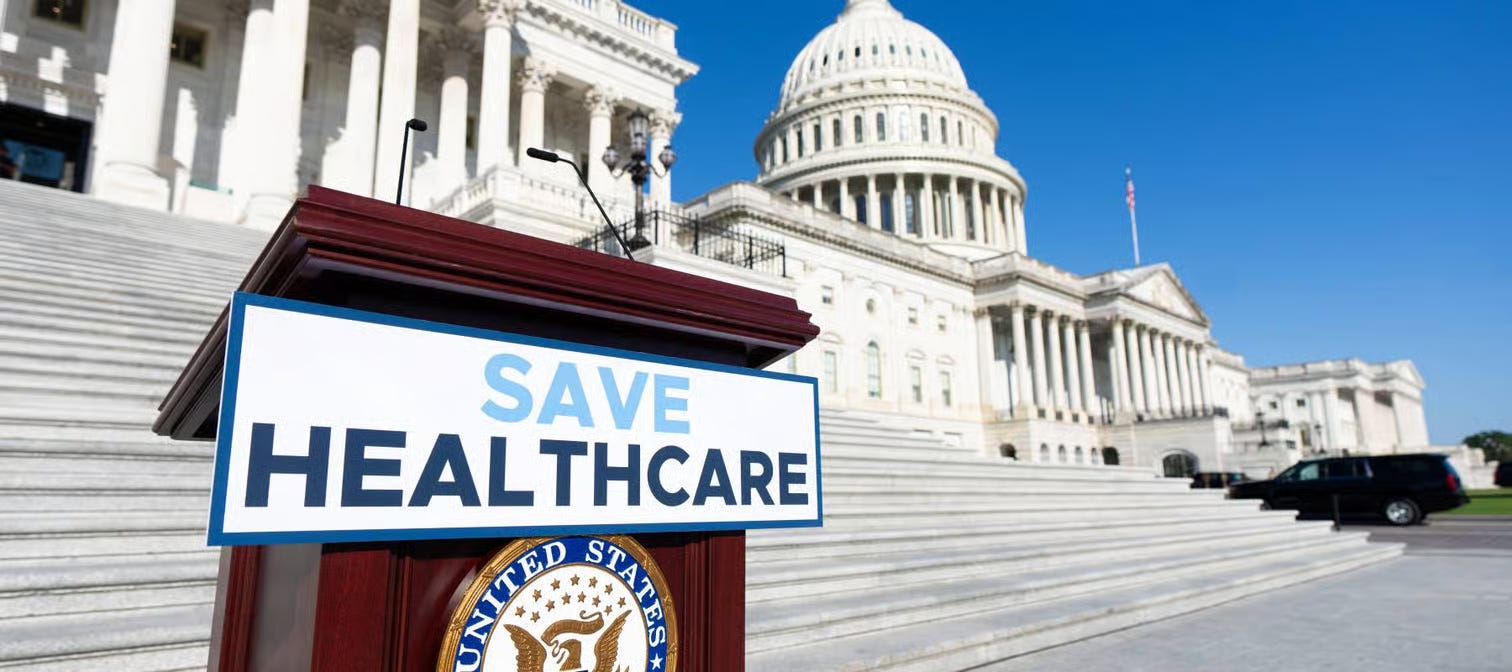
A major fight is unfolding in Congress over whether to extend the enhanced Affordable Care Act (ACA) subsidies that expire at the end of this month. Without action, premiums could spike for up to 15 million Americans — with some estimates warning of an average $700 annual increase per person. Middle-class families in swing states like Pennsylvania and Michigan would feel it first. For context, these enhanced subsidies, originally expanded under the American Rescue Plan in 2021 and extended through the Inflation Reduction Act, have made coverage more affordable by capping premiums at 8.5% of income for many enrollees, regardless of how high costs climb. Their expiration could lead to not just higher bills but also increased uninsured rates, potentially by 3–4 million people, according to independent analyses — exacerbating economic pressures amid ongoing inflation in healthcare sectors like prescription drugs and hospital stays.
Senate Democrats, led by Majority Leader Chuck Schumer, are pushing for a clean three-year extension, framing it as a straightforward step to prevent sudden premium hikes amid rising healthcare and household costs. Their argument is simple: protect families now and tackle broader reforms later. This push comes as Schumer has scheduled a vote for next week, aiming to put Republicans on the record and highlight the human cost of inaction, especially for older adults aged 50–64 who could see premiums double in some markets.
House Republicans, under Speaker Mike Johnson, are moving in a different direction. They’re finalizing their own competing bill, which could reach the House floor as early as next week. The GOP proposal includes income caps for subsidies, spending controls, and restrictions tied to the Hyde Amendment — injecting abortion politics directly into the healthcare debate. At the same time, Republicans face internal divisions: conservatives want deeper ACA rollbacks, while moderates fear the political consequences of letting premiums rise in an election year. This tension is amplified by proposals like Sen. Josh Hawley’s “No Taxes on Healthcare Act,” which floats a $25,000 deduction for out-of-pocket costs as an alternative to endless subsidies, signaling a shift toward tax-based incentives over direct aid.
This standoff is exactly the kind of Washington gridlock that leaves everyday Americans caught in the middle — watching both parties posture while the cost of simply staying insured continues to rise. It’s a reminder that healthcare reform, at its core, should be about affordability, predictability, and outcomes, not political leverage. We’ve seen this play out before: since the ACA’s passage in 2010, repeal attempts and tweaks have dominated, yet core issues like surprise billing and drug pricing persist, costing families billions annually. Real stories abound — like a Michigan teacher facing a $1,200 monthly premium jump, or Pennsylvania small business owners dropping coverage altogether — underscoring how these debates aren’t abstract but deeply personal.
A Better Alternative Is Already Taking Shape
While Congress trades press releases and partisan talking points, I’ve been working on something different: a comprehensive healthcare reform bill designed to actually lower costs and make the system easier to navigate for working families. I’m not releasing full details yet — that rollout comes in early 2026 — but the mission is simple: deliver quality care without punishing people with skyrocketing premiums and surprise billing.
The framework I’m developing avoids the predictable partisan traps that have derailed healthcare reform for years. Instead of throwing endless money at a broken structure, it blends targeted subsidies with real market competition, full price transparency, and strong oversight of insurers, hospitals, and pharmacy middlemen. One of the core principles is balancing affordability with accountability — protecting people with pre-existing conditions while demanding justification for every dollar charged in the system. For instance, it incorporates measures to tackle pharmacy benefit managers (PBMs) by requiring transparent rebate reporting, which could save consumers up to 20–30% on drug costs based on similar state-level experiments. It also promotes hospital price transparency rules with enforceable penalties, drawing from successful models in states like Colorado that have reduced procedure costs by 15%.
And here’s the key difference: this proposal doesn’t require the kind of hyper-partisan warfare we’re seeing now. It’s built so Republicans and Democrats both have a reason to support it — because it puts the American people above party agendas. Washington has had more than a decade to fight over the ACA. It’s time for both parties to put their political identities aside and finally work on something that lowers costs, expands access, and strengthens the system for everyone.
This proposal includes income-based limits, phased-in reforms, and strict auditing so every federal dollar can be traced. At the same time, it increases consumer choice and gives states more flexibility instead of forcing a national one-size-fits-all model. That’s what genuine, workable reform looks like — not the political theater we’re watching today. To illustrate, it draws inspiration from bipartisan successes like the No Surprises Act of 2020, which ended most surprise medical bills, proving that targeted, commonsense fixes can bridge divides and deliver results.
The full bill text will be released soon, but here’s what I can say now: this proposal aims to do what the ACA never fully achieved — lower costs, expand access, and reduce federal bloat. It offers a smarter path forward than simply extending subsidies forever or attaching ideological riders in the middle of an election year. In a Congress desperate for real problem-solvers, I’m putting a serious solution on the table.
What do you think — could a blueprint like this break the gridlock? Share your thoughts below
.